Why Is the 54-Day Rosary Novena Called Irresistible?
4 min read ·
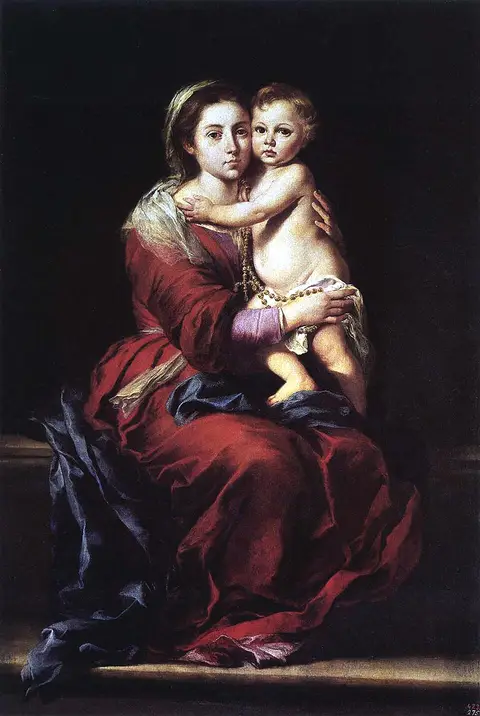
The 54-day Rosary Novena to Our Lady of Pompeii is called the irresistible novena because of the many testimonies of graces received through it, starting with the healing of Fortuna Agrelli in Naples in 1884. According to her account, Our Lady said she could not refuse someone who called on her as Queen of the Holy Rosary. The name comes from the faithful, not from a Church document, and it does not promise an automatic result: it expresses trust that no prayer offered with faith goes unanswered.
The name gives hope to anyone in a hard place. It can also suggest that 54 days of Rosaries guarantee the result we want. So it is worth looking at where it comes from and how a Christian should understand it.
Where does the name "irresistible novena" come from?
The first testimony comes from Naples in 1884. Fortuna Agrelli, gravely ill, was praying the Rosary with her family. According to the account, Our Lady told her that she could not refuse, because Fortuna had called on her as Queen of the Holy Rosary, and asked for three novenas in petition and three in thanksgiving. The young woman recovered. Bartolo Longo, founder of the shrine in Pompeii and now a saint, wrote down and spread her story. You can read more in Fortuna Agrelli and the Origin of the 54-Day Novena.
In the following years many letters describing graces reached Pompeii, and Bartolo Longo published them. That is how the word "irresistible" stuck. It describes the experience of many people, not a rule that binds God.
Is the irresistible novena the same as Padre Pio's novena?
Not quite, and the two are often confused. The same nickname is also given to a short novena to the Sacred Heart of Jesus that St Padre Pio prayed every day for those who asked for his prayers. That one is brief: three prayers to the Sacred Heart, each followed by an Our Father, a Hail Mary and a Glory Be, with the Hail, Holy Queen and an invocation to St Joseph.
The 54-day Rosary Novena is a different devotion: the Rosary prayed every day for 54 days, in honour of Our Lady of Pompeii. If you are looking for the Sacred Heart prayer, you will find it in Catholic prayer books under "Padre Pio's Sacred Heart novena." Everything on this page is about the 54-day Rosary.
What other names does it have?
You may meet the same novena under several names:
- the 54-Day Rosary Novena;
- the Novena to Our Lady of Pompeii, or the Pompeii Novena;
- the Novena of Pompeii, or the Pompeian Novena;
- the irresistible novena.
All of them mean the same practice: 27 days of petition and 27 days of thanksgiving, with three Rosaries each day. The novena guide lists the names and summarises how to pray it.
Does "irresistible" mean the novena is guaranteed to work?
No, and it is important to say so clearly. The Catechism of the Catholic Church (2734 to 2737) speaks about this simply and honestly. When we feel our prayer has not been heard, our trust as God's children is put to the test. It helps to ask which God we are speaking to: the Father who knows what we need, or a means to carry out our own plans. We do not always know how to ask for what is truly good, and the Holy Spirit teaches us to pray according to God's will.
So "irresistible" does not mean that God will grant every request exactly as we worded it. It means that no prayer offered with trust goes unanswered. The answer may be healing, or it may be the strength to carry a cross, peace of heart or clarity in a hard decision. If you are living with a prayer that seems unanswered, read Petition and thanksgiving, which looks at that question in depth.
Is it superstitious to pray a novena for a result?
Not if it is prayed as prayer. Superstition treats words as a mechanism that forces an outcome. A novena is a persevering request to a Father, made through Mary, that ends with "Thy will be done." Asking for concrete things is part of Christian prayer; Jesus himself taught us to ask for daily bread.
Trust and perseverance
Fifty-four days are a school of patience. Each day we return to the same intention, and each day we learn to place it in God's hands. Jesus told us to pray always and not lose heart, like the widow in the parable who kept coming back to the judge (Luke 18:1 to 8).
Do not skip the thanksgiving
The best answer to the question of "irresistibility" is built into the novena itself. After 27 days of petition come 27 days of thanksgiving, and we give thanks before we see the answer. Gratitude frees prayer from bargaining and turns it into trust.
When you are ready, begin the novena with one specific intention (see how to word your intention) and pray both parts to the end. The day-by-day plan is in the novena day by day. If you receive a grace, share it on the testimonies page so that others find hope too.
Frequently asked questions
Why is the 54-day Rosary Novena called irresistible?
Because of the many testimonies of graces received through it, beginning with the healing of Fortuna Agrelli in 1884. The name comes from the faithful, not from an official Church document.
Is the irresistible novena the same as Padre Pio's novena?
No. Padre Pio's irresistible novena is a short Sacred Heart prayer. The 54-day Rosary Novena to Our Lady of Pompeii is the Rosary prayed daily for 54 days.
Does the irresistible novena guarantee that my prayer will be granted?
No. It expresses trust that God answers every prayer offered with faith, but he answers as a Father: sometimes as we asked, sometimes later or in another way.
This text awaits review by a priest.
Start the novena
Begin the 54-day Pompeian Novena in the app. It guides you through each day's prayers and keeps track of your progress.
Printables:The Rosary on one page54-day checklist